Our Roots
A FAMILY STORY FOR OVER
60 YEARS
The Fernanda Cappello Estate is part of a broader story: the journey of a family that, starting from sharecropping, has managed to build a solid and diversified heritage with commitment and determination. The heirs of this vision still carry on the main entrepreneurial activities initiated by Ernesto, Alfonso, and Alfeo, such as the Cappello Furniture Factory and the Tomina agricultural company. Over time, they have also created new ventures, including Korked, a company specializing in cork production, as well as various agricultural, real estate, and commercial activities.
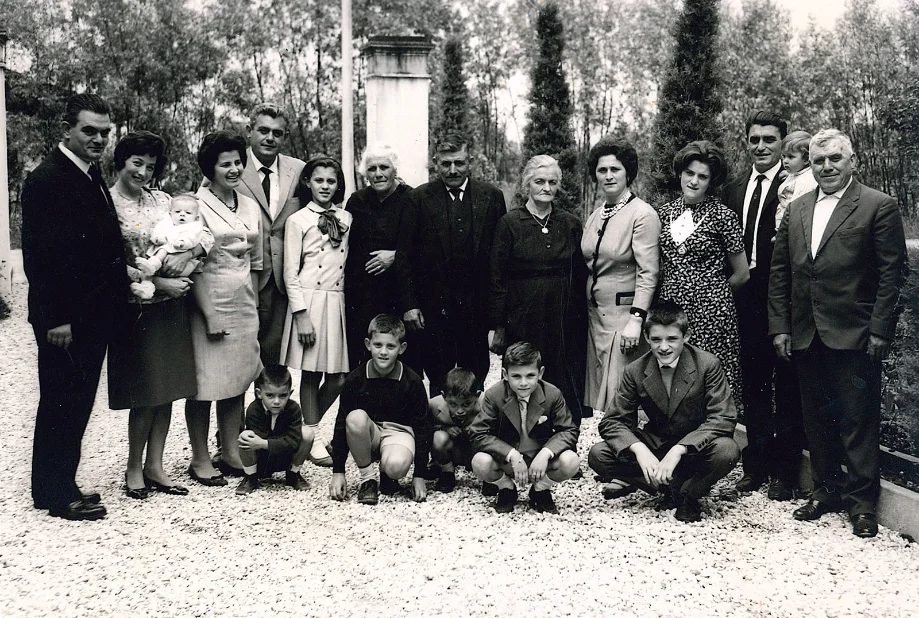
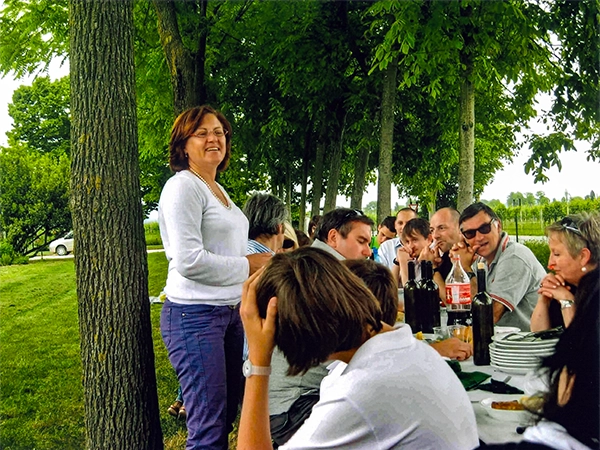
The jewel in the family's crown remains the Fernanda Cappello Estate, the family winery, now passionately led by the third generation. Although the various branches of the family now live in different places, once a year everyone gathers for a special weekend often held at the Sequals estate — an event that, year after year, renews the spirit of belonging and the strength of tradition.
The jewel in the family's crown remains the Fernanda Cappello Estate, the family winery, now passionately led by the third generation. Although the various branches of the family now live in different places, once a year everyone gathers for a special weekend often held at the Sequals estate — an event that, year after year, renews the spirit of belonging and the strength of tradition.
1950
From Sharecropping to Enterprise:
Three Brothers and a Dream
Three Brothers and a Dream
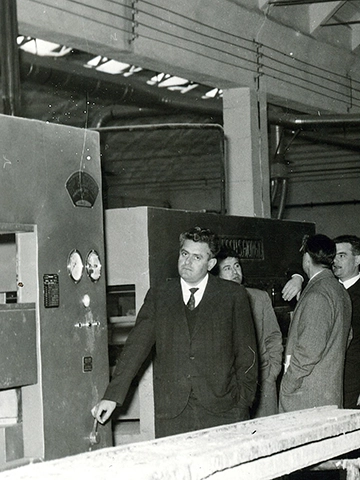
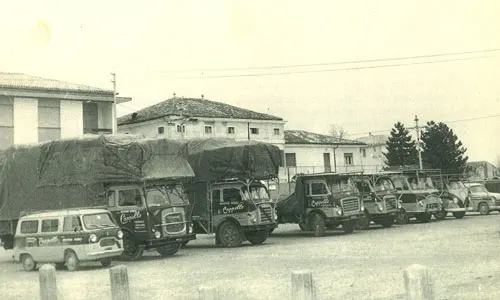
Three brothers from Campodarsego, originating from a family of sharecroppers, managed to turn ingenuity and dedication into a successful entrepreneurial adventure. It all began in a garage, where they handcrafted furniture. That passion soon transformed into a furniture factory that grew to employ up to 400 employees.
Within a few decades, the brothers created a true entrepreneurial group, active in various sectors: from furniture production and sales to agricultural, real estate, and commercial companies.
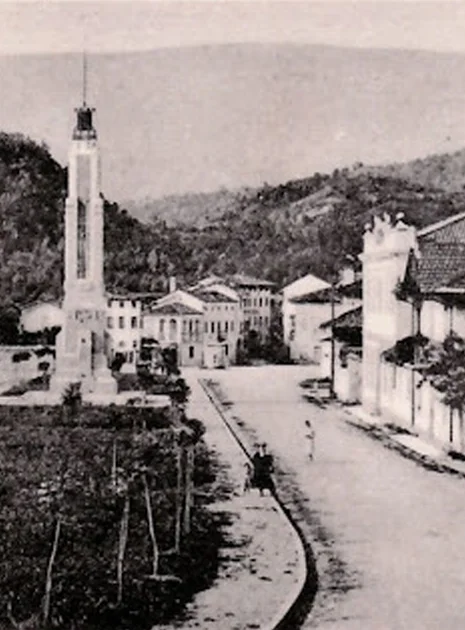
But their roots remained firmly anchored to the land. When the opportunity arose to purchase several plots of land — often from owners who had emigrated abroad — in a high wine-growing potential area in Sequals, they seized the opportunity immediately.
That territory, recently made cultivable thanks to the construction of irrigation channels at the end of the 1960s, was located in an area with gravelly and loose soil, which until then made any agricultural activity difficult. The arrival of water changed everything, opening a new historical phase for the previously uncultivated lands of Sequals, linked to quality viticulture.
Within a few decades, the brothers created a true entrepreneurial group, active in various sectors: from furniture production and sales to agricultural, real estate, and commercial companies.
But their roots remained firmly anchored to the land. When the opportunity arose to purchase several plots of land — often from owners who had emigrated abroad — in a high wine-growing potential area in Sequals, they seized the opportunity immediately.
That territory, recently made cultivable thanks to the construction of irrigation channels at the end of the 1960s, was located in an area with gravelly and loose soil, which until then made any agricultural activity difficult. The arrival of water changed everything, opening a new historical phase for the previously uncultivated lands of Sequals, linked to quality viticulture.
1960
Pioneers in Sequals, Believing in a Territory Now Recognized Among the Best in Friuli
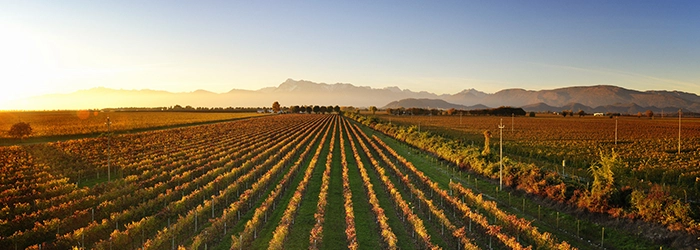
The activities initiated by the Cappello family often started from scratch and, over time, have transformed into solid and recognized realities. At the base of everything: initiative, vision, and unwavering determination. The perfect example is the Fernanda Cappello Estate in Sequals, founded in an area that, in the 1950s, was little more than an arid steppe.
Our family was among the first to plant vineyards (and orchards) and build a winery in that territory that seemed hostile to agriculture. Everything changed in the 1960s when the Cellina-Meduna Consortium — also known for having built the first Italian hydroelectric power plant — began constructing artificial channels, finally bringing irrigation water to previously unproductive areas, such as the gravelly lands of Sequals.
Three brothers from the province of Padua, eager to return to their agricultural roots and reinvest the fruits of the success achieved with the family furniture factory, purchased 130 hectares in this area.
Thus, they began planting the first vineyards and building the first winery in the area. Today Sequals is a highly sought-after microzone by many prestigious wineries, but at the time it was a pioneering intuition, perhaps even a fortunate one by the Cappello family. Some tried with apple trees, given the similarities of this territory with South Tyrol, but it was the vine that proved to be the true wealth of the territory.
Our family was among the first to plant vineyards (and orchards) and build a winery in that territory that seemed hostile to agriculture. Everything changed in the 1960s when the Cellina-Meduna Consortium — also known for having built the first Italian hydroelectric power plant — began constructing artificial channels, finally bringing irrigation water to previously unproductive areas, such as the gravelly lands of Sequals.
Three brothers from the province of Padua, eager to return to their agricultural roots and reinvest the fruits of the success achieved with the family furniture factory, purchased 130 hectares in this area.
Thus, they began planting the first vineyards and building the first winery in the area. Today Sequals is a highly sought-after microzone by many prestigious wineries, but at the time it was a pioneering intuition, perhaps even a fortunate one by the Cappello family. Some tried with apple trees, given the similarities of this territory with South Tyrol, but it was the vine that proved to be the true wealth of the territory.
1970
The Seventies: Between Recognitions and New Directions
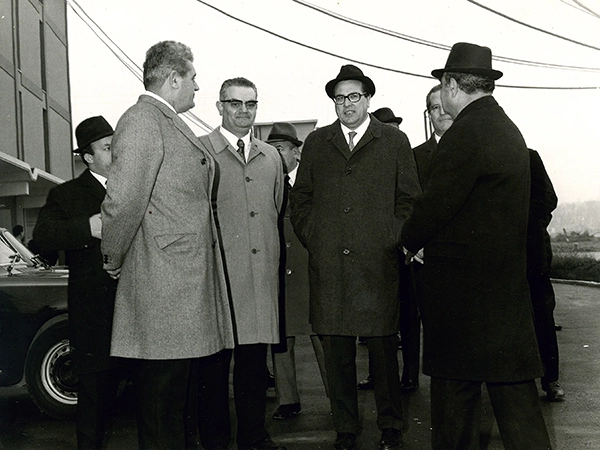
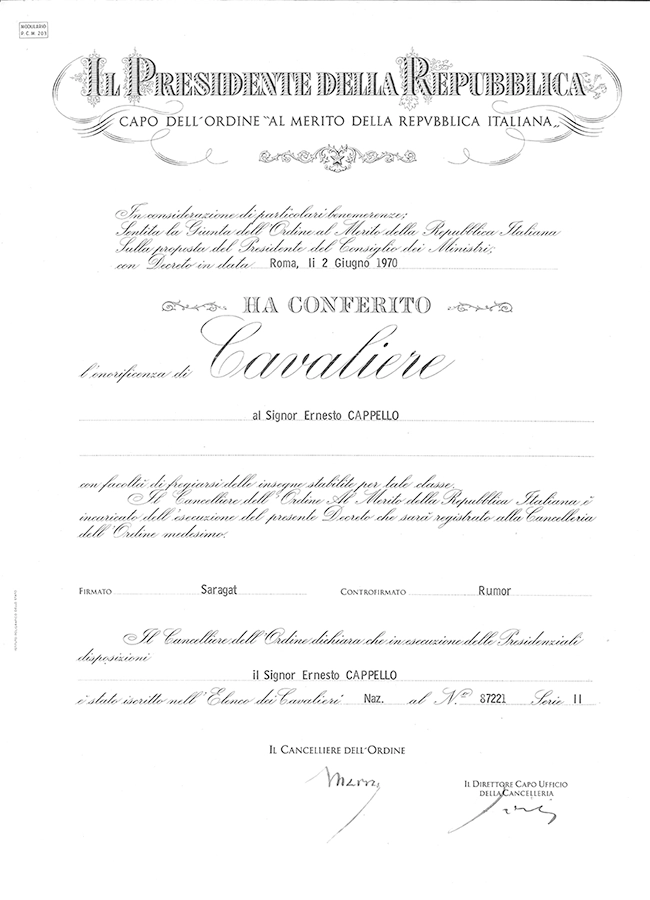
In the 1970s, many important changes occurred for the Cappello family. One of the most significant moments was in 1970 when Ernesto Cappello received the honor of Knight of the Italian Republic, awarded by President Saragat.
A few years later, the three brothers decided to separate their respective business activities. The families had expanded, and each chose to follow their own path, dividing the properties into three branches. Ernesto retained the furniture factory and the Sequals winery.
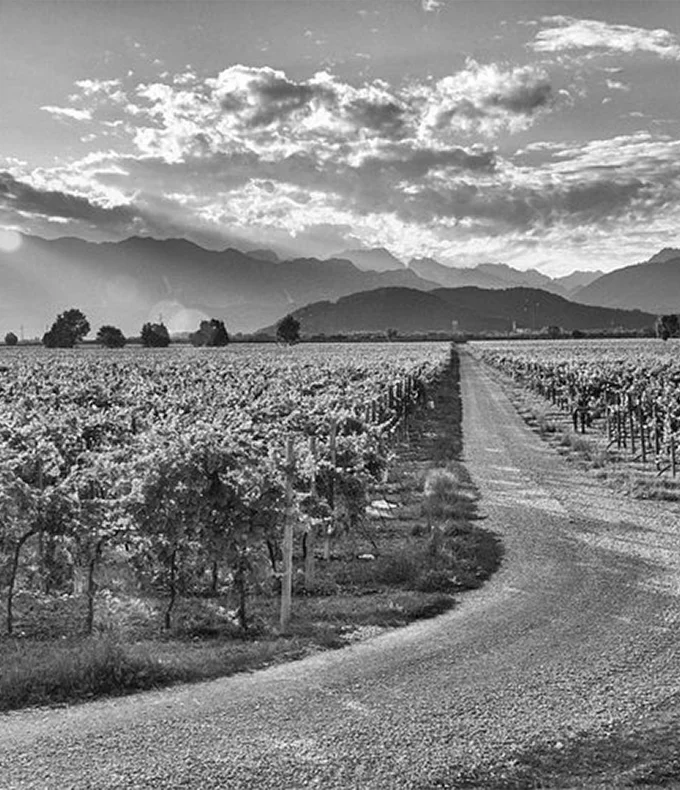
While he continued to focus mainly on the furniture factory, the management of the winery passed to his wife Elda, who made it one of the first female-led wineries in Italy. Elda also came from a family of sharecroppers and personally oversaw all development phases: from managing the countryside to reorganizing the winery. She completed the planting of the 130 hectares of vineyard and equipped the structure with the necessary equipment to produce good quality wines.
In those years, mainly Tocai and Cabernet were planted, but experiments were also started on different varieties to identify the types most suitable for the territory and to get the best expression of the terroir. The central body of the winery was also built, with a capacity of about one million liters, divided into tanks of different sizes and functions, designed to optimize every phase of the production process.
A few years later, the three brothers decided to separate their respective business activities. The families had expanded, and each chose to follow their own path, dividing the properties into three branches. Ernesto retained the furniture factory and the Sequals winery.
While he continued to focus mainly on the furniture factory, the management of the winery passed to his wife Elda, who made it one of the first female-led wineries in Italy. Elda also came from a family of sharecroppers and personally oversaw all development phases: from managing the countryside to reorganizing the winery. She completed the planting of the 130 hectares of vineyard and equipped the structure with the necessary equipment to produce good quality wines.
In those years, mainly Tocai and Cabernet were planted, but experiments were also started on different varieties to identify the types most suitable for the territory and to get the best expression of the terroir. The central body of the winery was also built, with a capacity of about one million liters, divided into tanks of different sizes and functions, designed to optimize every phase of the production process.
1980
The Courage to Continue, the Intuition to Innovate: This is How the Excellence of Our Aromatic Whites Was Born.
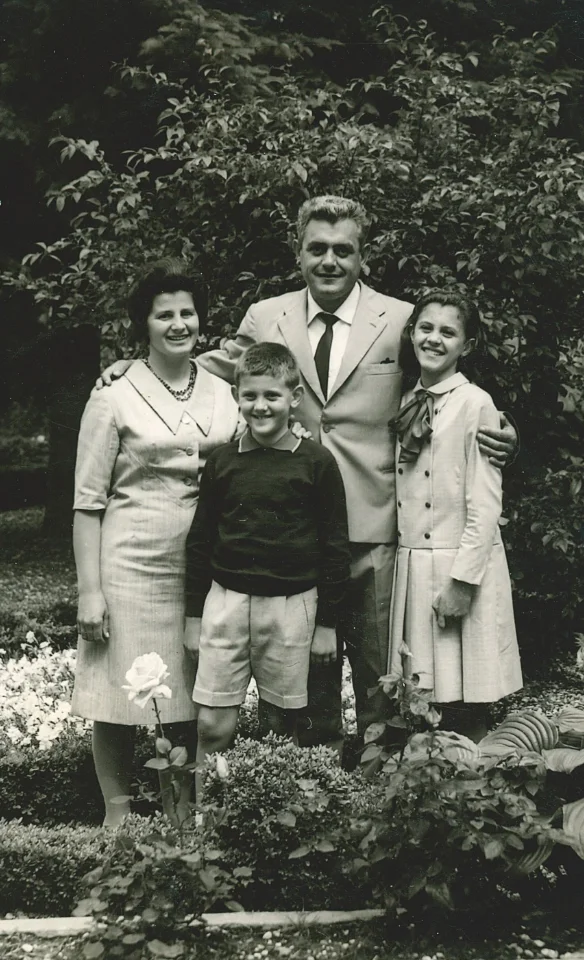
In 1980, unfortunately, Ernesto Cappello passed away prematurely at the age of only 50. The management of the furniture factory and the Sequals winery thus passed into the hands of his wife Elda and their two very young children, Armando and Fernanda.
After about twenty years of winemaking activity in Sequals, the experience accumulated in the field had led to a good understanding of the territory and its potential. It was understood that aromatic vines offered results above average.
Thus, following the first replantings, they began to focus on varieties such as Sauvignon, Traminer, Riesling, Incrocio Manzoni, and Moscato: vines traditionally cultivated in South Tyrol, but which proved to adapt perfectly to the microzone of Sequals.
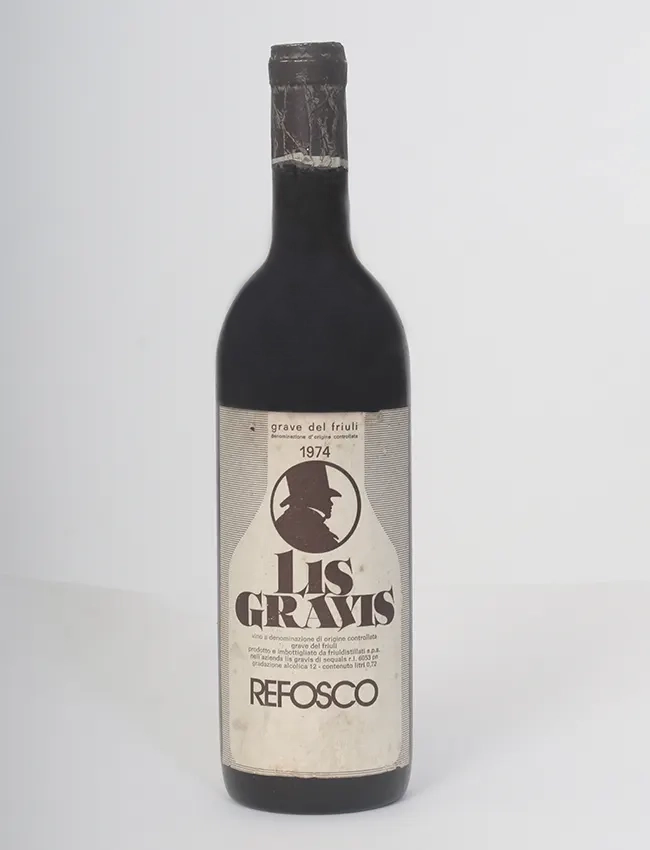
During the 1980s, the company specialized in the production of high-quality bulk wine, destined for renowned wineries that bottled it under their own brand.
After about twenty years of winemaking activity in Sequals, the experience accumulated in the field had led to a good understanding of the territory and its potential. It was understood that aromatic vines offered results above average.
Thus, following the first replantings, they began to focus on varieties such as Sauvignon, Traminer, Riesling, Incrocio Manzoni, and Moscato: vines traditionally cultivated in South Tyrol, but which proved to adapt perfectly to the microzone of Sequals.
During the 1980s, the company specialized in the production of high-quality bulk wine, destined for renowned wineries that bottled it under their own brand.
1990
Our Oenological Philosophy and Technological Improvements in the Winery.
In our journey towards quality, we have initiated – and continue to this day – a valuable collaboration with oenologist Fabio Coser, multiple times awarded as Oenologist of the Year and creator of some of Italy's best wines. With him, we share a clear vision: wine should be accompanied, not forced.
Our philosophy is to intervene as little as possible, avoiding invasive additions like tannins or mannoproteins, often used to correct or standardize. We prefer to respect the natural evolution of the wine, resorting to certain interventions only when necessary, on batches destined for secondary lines.
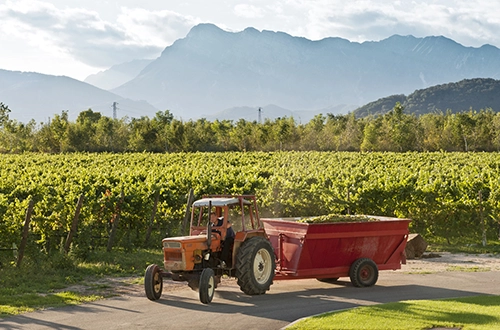
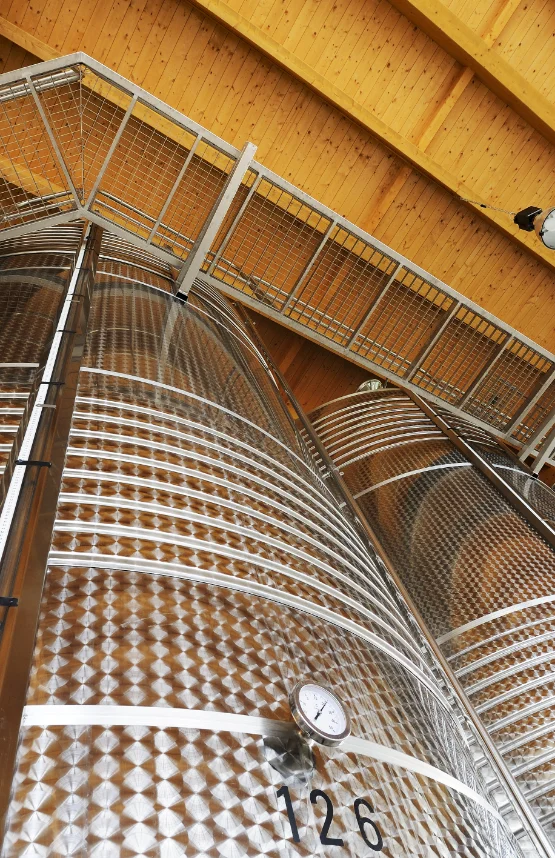
We have invested in useful but non-invasive technologies, modernizing the winery and vineyards. We were among the first to use harvesters and recovery sprayers in the field and among the first to use in the winery some technologies like centrifuges, temperature control, micro-oxygenation, and more.
While we have always looked with skepticism at other technologies, even after trying them, such as osmosis machines, concentrators, tangential filtrations, decarbonators that can indeed simplify the life of the oenologist, but which we believe can negatively affect the quality of the wine, albeit minimally.
Our philosophy is to intervene as little as possible, avoiding invasive additions like tannins or mannoproteins, often used to correct or standardize. We prefer to respect the natural evolution of the wine, resorting to certain interventions only when necessary, on batches destined for secondary lines.
We have invested in useful but non-invasive technologies, modernizing the winery and vineyards. We were among the first to use harvesters and recovery sprayers in the field and among the first to use in the winery some technologies like centrifuges, temperature control, micro-oxygenation, and more.
While we have always looked with skepticism at other technologies, even after trying them, such as osmosis machines, concentrators, tangential filtrations, decarbonators that can indeed simplify the life of the oenologist, but which we believe can negatively affect the quality of the wine, albeit minimally.
2000
The Beginning of Bottling and the Choice to Stay True to Our Identity
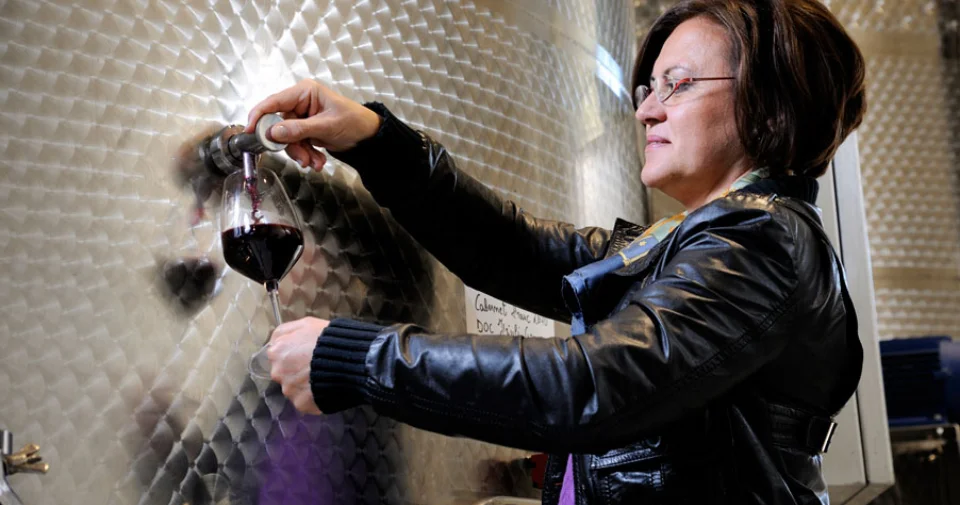
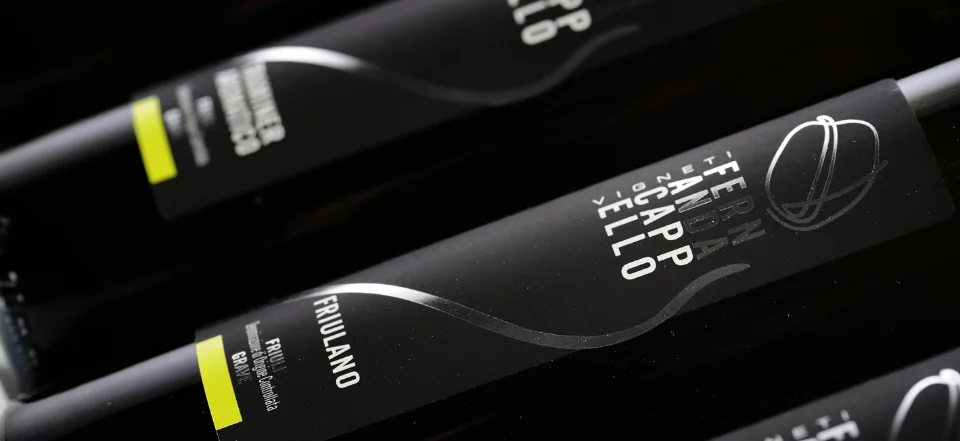
At the beginning of the 2000s, we felt it was time to tell the world about our wines. Until then, our reputation was well established among industry operators: we were recognized as suppliers of very high-quality bulk wine, destined for prestigious wineries that appreciated its value. But the next step was inevitable: to bottle our wines directly and sign them with our name.
It was the beginning of a new adventure, founded on the belief that quality – the authentic kind, not shouted – would find its way.
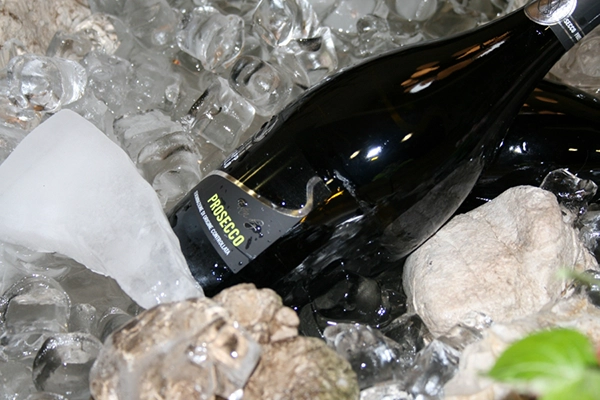
In those same years, another important decision marked our identity: we did not follow the Prosecco boom, then in full swing. A counter-current choice, but made with a long-term view, because we believed and still believe that Sequals deserves to be told through varieties that enhance the vocation of the territory: Sauvignon, Chardonnay, Cabernet Franc. Vines capable of producing elegant, long-lived wines, true interpreters of the Friulian land.
Another choice, perhaps even more radical, was to remain a family business. We entrusted the management to high-profile managerial figures for a period, but we realized that in wine – especially in that which comes from the land and speaks of truth – the eye, the heart, and the time of those who live that land every day are needed. As the proverb says, "the master's eye fattens the horse," and in our case, it preserves the quality in every bottle.
It was the beginning of a new adventure, founded on the belief that quality – the authentic kind, not shouted – would find its way.
In those same years, another important decision marked our identity: we did not follow the Prosecco boom, then in full swing. A counter-current choice, but made with a long-term view, because we believed and still believe that Sequals deserves to be told through varieties that enhance the vocation of the territory: Sauvignon, Chardonnay, Cabernet Franc. Vines capable of producing elegant, long-lived wines, true interpreters of the Friulian land.
Another choice, perhaps even more radical, was to remain a family business. We entrusted the management to high-profile managerial figures for a period, but we realized that in wine – especially in that which comes from the land and speaks of truth – the eye, the heart, and the time of those who live that land every day are needed. As the proverb says, "the master's eye fattens the horse," and in our case, it preserves the quality in every bottle.
2010
Internationalization and the Contemporary Soul
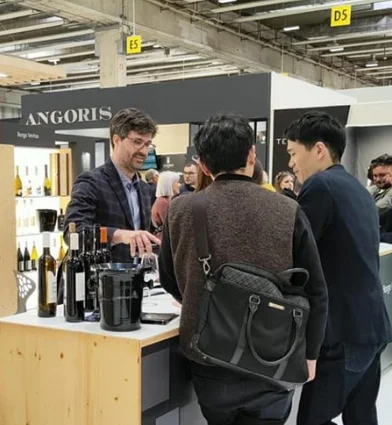
In the following decade, it was Nicola – young, curious, determined – who took over the commercial side, traveling around the world to promote Cappello wines. He participated in international fairs, visited distant markets, and patiently built a network of importers that still represents the backbone of our foreign clientele.
Every year, a new piece was added: one more importer, a new variety in the range, a constant growth in bottles sold. To complete the picture, a second line was also introduced, designed to reach a wider audience without ever compromising on quality. The strategic choice was clear: to position our wines in an accessible price range but capable of offering an excellent quality-price ratio. The goal was ambitious – to bottle at least half of the production of our 130 hectares – but we believed (and still believe) that every bottle should speak of us, our land, and our vision.
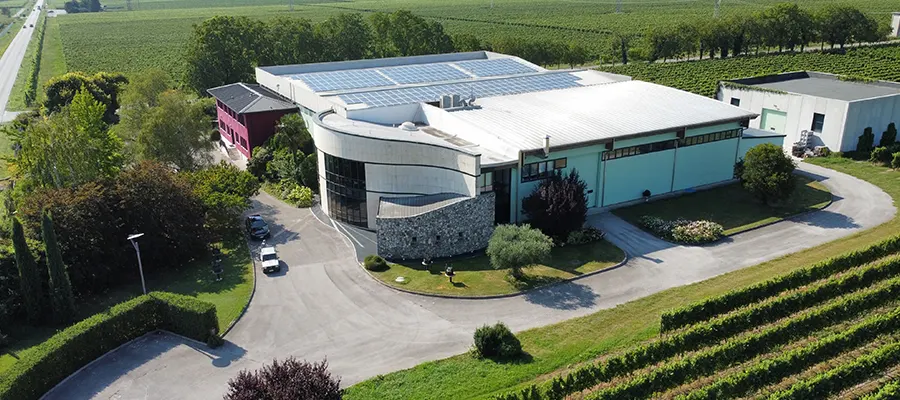
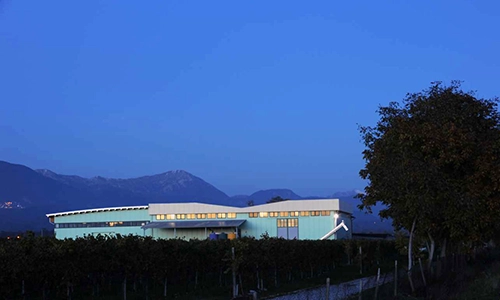
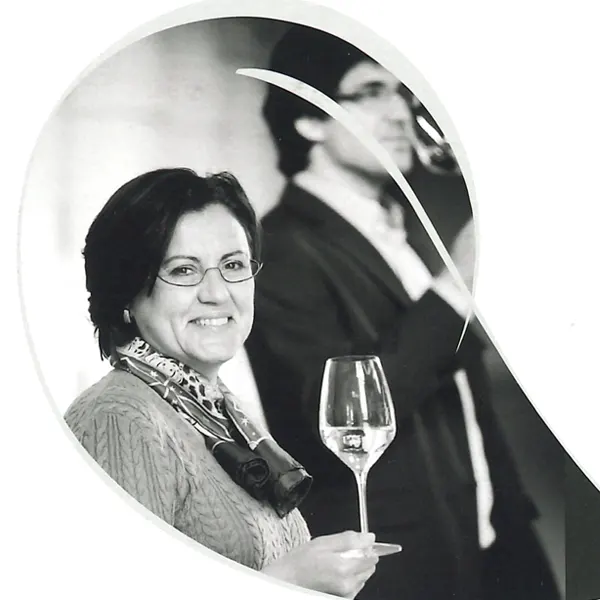
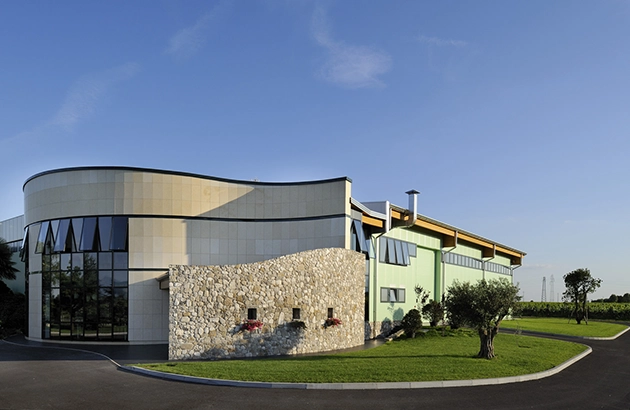
Success was not long in coming. Thus, we decided to invest in the construction of a new winery and an enoteca, finally designed by Fernanda, who was able to shape – with the sensitivity of her degree in architecture – a space that was both a workplace and a visual narrative of our identity.
It was not easy: the market was saturated, the competition fierce. But once again, it was quality that made the difference. In a world full of labels, our wine continued to stand out. And to conquer.
Every year, a new piece was added: one more importer, a new variety in the range, a constant growth in bottles sold. To complete the picture, a second line was also introduced, designed to reach a wider audience without ever compromising on quality. The strategic choice was clear: to position our wines in an accessible price range but capable of offering an excellent quality-price ratio. The goal was ambitious – to bottle at least half of the production of our 130 hectares – but we believed (and still believe) that every bottle should speak of us, our land, and our vision.
Success was not long in coming. Thus, we decided to invest in the construction of a new winery and an enoteca, finally designed by Fernanda, who was able to shape – with the sensitivity of her degree in architecture – a space that was both a workplace and a visual narrative of our identity.
It was not easy: the market was saturated, the competition fierce. But once again, it was quality that made the difference. In a world full of labels, our wine continued to stand out. And to conquer.
2020
Family Continuity and a New Phase of Expansion
The company is now over 60 years old, having passed to the third generation. Far from us to distance ourselves from this beautiful world of wine where the complexity of this business made of seriousness and hard work combines with creativity, poetry, and lightness.
In recent years, the drive for innovation and the desire to open up to new projects have led to significant expansion. From 2021 to 2023, production increased from 100,000 to 300,000 bottles annually, marking growth against the general trend of the wine market during the period.
This time, the increase was not driven by foreign markets, but by the Italian market: a confirmation of the growing trust of the national public in Cappello wines. A result that rewards courageous choices, long-term vision, and daily work that has never ceased to focus on quality.
In recent years, the drive for innovation and the desire to open up to new projects have led to significant expansion. From 2021 to 2023, production increased from 100,000 to 300,000 bottles annually, marking growth against the general trend of the wine market during the period.
This time, the increase was not driven by foreign markets, but by the Italian market: a confirmation of the growing trust of the national public in Cappello wines. A result that rewards courageous choices, long-term vision, and daily work that has never ceased to focus on quality.
2022/23
Continuous Investments in Technological Innovations
In 2022 and 2023, we invested in new technologies to improve every phase of production, focusing on efficiency and quality.
We started with the introduction of the Pellenc Diamant 9056 harvester, which made grape harvesting faster and more delicate. Following this, the new Dynamos filter simplified the management of lees and pomace, replacing the old rotary filter with flour.
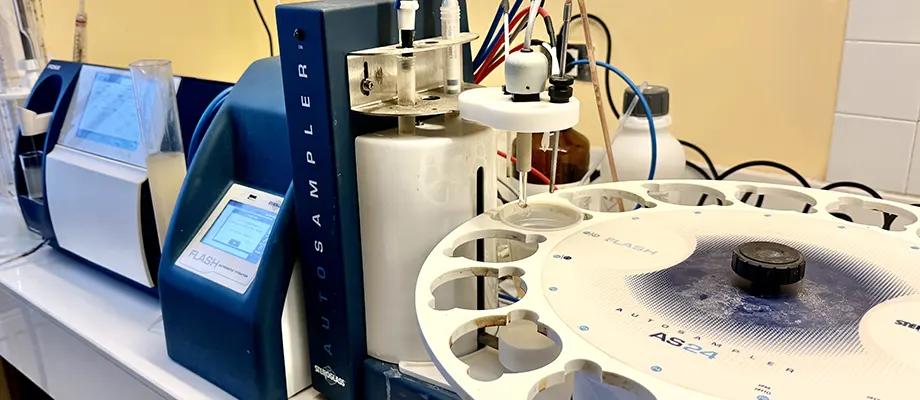
In 2023, a new Wilmess press also arrived, which with the new patented Flexidrain technology, unlike classic channel presses, ensures better drainage and lighter pressing. In the laboratory, the new OenoFoss 2, replacing the Foss 1, allows us immediate analyses, helping us prevent defects and constantly monitor quality.
Also in 2023, we introduced the Ganimede technology for must macerations on the skins, a practice we use a lot, even on certain white wines. This technology allows the release of carbon dioxide at regular intervals inside the tank where maceration takes place, eliminating the need for pump-overs and reducing the wine's contact with oxygen.
In these years, some battery storage for solar panels has also been acquired, and some autoclaves have been taken to start sparkling internally.
All this is part of a vision that looks to the future, but with a firm principle: every technological choice must serve to improve the quality of the wine and enhance the identity of our territory.
We started with the introduction of the Pellenc Diamant 9056 harvester, which made grape harvesting faster and more delicate. Following this, the new Dynamos filter simplified the management of lees and pomace, replacing the old rotary filter with flour.
In 2023, a new Wilmess press also arrived, which with the new patented Flexidrain technology, unlike classic channel presses, ensures better drainage and lighter pressing. In the laboratory, the new OenoFoss 2, replacing the Foss 1, allows us immediate analyses, helping us prevent defects and constantly monitor quality.
Also in 2023, we introduced the Ganimede technology for must macerations on the skins, a practice we use a lot, even on certain white wines. This technology allows the release of carbon dioxide at regular intervals inside the tank where maceration takes place, eliminating the need for pump-overs and reducing the wine's contact with oxygen.
In these years, some battery storage for solar panels has also been acquired, and some autoclaves have been taken to start sparkling internally.
All this is part of a vision that looks to the future, but with a firm principle: every technological choice must serve to improve the quality of the wine and enhance the identity of our territory.
2024/25
New Approach to Human Resources and New Infrastructures
New Approach to Human Resources
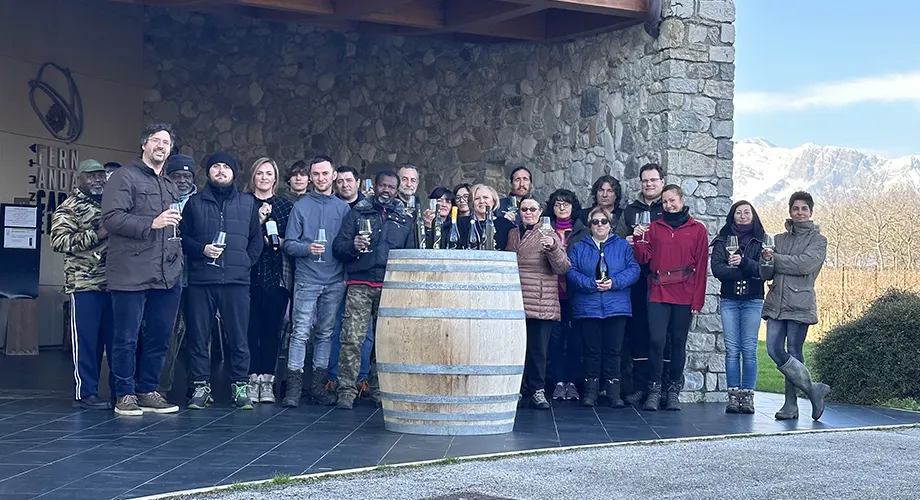
Faced with the growing difficulty of finding qualified personnel, we chose a different path from "poaching" experienced workers from other companies. Instead, we decided to invest in internal training, focusing on people who have already shown the right attitude, training them according to our standards. This approach has allowed us not only to contain costs but above all to build a team that works in the way we consider most correct and effective.
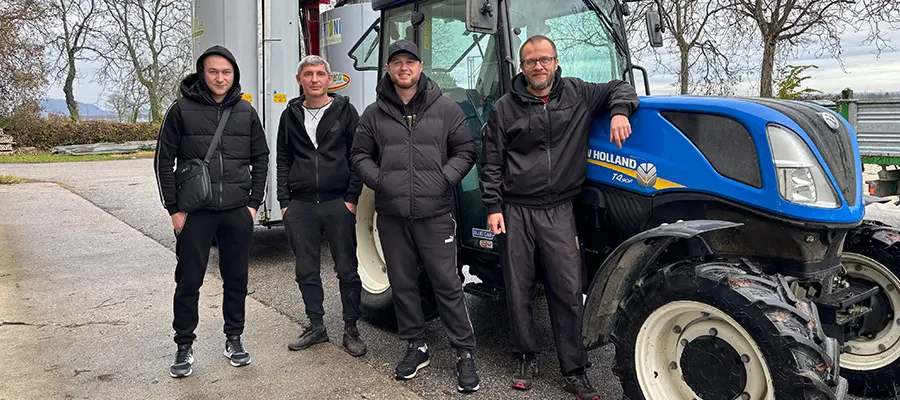
In this perspective, we have invested in six collaborators from Ukraine, fleeing the war and highly motivated to build a new life. We have offered these people, in some cases, even free housing, thus promoting their integration and serenity.
New Infrastructures
In parallel, to support the growth in bottle sales, we have started work to double the warehouses dedicated to bottles.
This new infrastructure will allow us not only to manage larger bottlings and store greater quantities of materials but also to free up space in the cellar for future development projects, such as new autoclaves.
Faced with the growing difficulty of finding qualified personnel, we chose a different path from "poaching" experienced workers from other companies. Instead, we decided to invest in internal training, focusing on people who have already shown the right attitude, training them according to our standards. This approach has allowed us not only to contain costs but above all to build a team that works in the way we consider most correct and effective.
In this perspective, we have invested in six collaborators from Ukraine, fleeing the war and highly motivated to build a new life. We have offered these people, in some cases, even free housing, thus promoting their integration and serenity.
New Infrastructures
In parallel, to support the growth in bottle sales, we have started work to double the warehouses dedicated to bottles.
This new infrastructure will allow us not only to manage larger bottlings and store greater quantities of materials but also to free up space in the cellar for future development projects, such as new autoclaves.